Kettle Sour
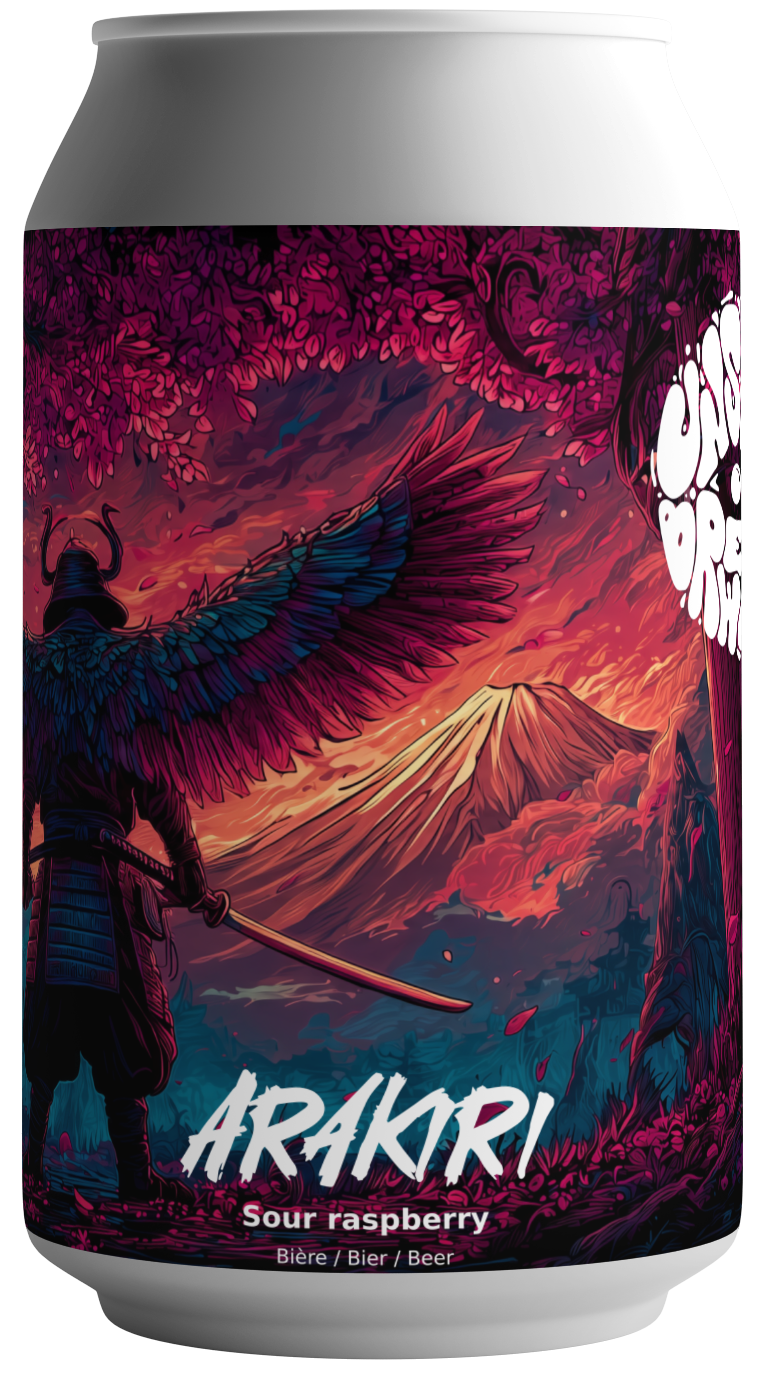
Arakiri - Raspberry Sour
€4,00
- ABV
- 5.5% vol.
- Mascotte
- Samourai
Raspberry Kettle Sour.
Ingredients : water, cereals (barley, wheat), raspberries, hops, yeast. Contains gluten.
Alc. 5.5% alc/vol
Vol. : 330 mL
🐦🗻 Arakiri – The raspberry Sour that cuts straight to the bone ⚔️🍓
Get ready for a flavour duel worthy of the greatest samurai... with a rainbow-feathered twist.
Arakiri is our tart tribute to Japanese culture and to our not-quite-right sense of humour. A beer as red as the honour of a rōnin who just botched his sushi, and as explosive as a parrot doped up on raspberries. Yes, you read that right. Because behind a name that goes “hara” in your belly and “kiri” on your tongue hides some serious fruity madness: 200 g/L of fresh raspberries, thrown into the tank without mercy. It’s not a beer, it’s a red-fruit kata.
The moment you stick your nose in: bam, a field of raspberries wraps around you like a soft, tangy tornado. On the palate it’s lively, fresh and sharp. A clean raspberry attack, an acidity that cuts through as cleanly as a honed sword, and a soft lactic finish that recalls the homemade yoghurt your grandma could have made you… if she’d been a master brewer in Kyoto.
Zero residual sugar, just pure pleasure. Every sip is a round trip to the summit of Mount Fuji, with macaw feathers on your back and a mouth full of sour sweets. Didn’t think a bird could commit seppuku on your palate? Think again.
✨ Perfect as an aperitif with your sensei crew, as a refresher between two ninja IPAs, or for dessert with a scoop of vanilla ice cream under the cherry trees.
Arakiri is our art of brewing with a blade. Noble, unhinged and utterly merciless.
🦜 One motto: honour, acidity, raspberry. And back for another round.
Blog
Kettle Sour: controlled acidity, unapologetic raspberry.
Ingrédients
Frequently asked questions
What is a kettle sour and how does it differ from a gueuze?
A kettle sour acidifies the wort in the kettle, in 24 to 48 hours, using inoculated and controlled Lactobacillus bacteria. A gueuze or lambic ferments spontaneously for one to three years, with a complex and unpredictable result. Arakiri aims for the opposite: a clean, sharp, reproducible acidity, with no wild character.
How many raspberries are in Arakiri?
200 g of raspberries per litre, added in the tank. That's a massive dose, and it's deliberate: the raspberry isn't there to add a discreet perfume but to take over the whole foreground. Its citric and malic acids also reinforce the lactic acid from fermentation.
Is Arakiri sweet?
No, zero residual sugar. The raspberry brings fruit, not sweetness — fermentation consumes the sugars, including those from the fruit. The result is lively and sharp, with a lactic finish closer to plain yoghurt than syrup.
What to drink Arakiri with?
Its acidity cleanses the palate, making it an excellent aperitif beer or a bridge between two hoppy beers. It also works with dessert, alongside vanilla ice cream. Serve it well chilled, between 4 and 7 °C, and drink it young to enjoy its liveliness.